How European research cooperation is transforming cybersecurity from a national defense issue into a shared resilience architecture.
Solomiia Beska
Researcher in Cybersecurity, International Law, and European Governance Democracy Institute, Central European University
Cybersecurity has gradually changed the meaning of solidarity in Europe: resilience no longer depends only on financial support or military assistance, but also on shared technological capacity, research cooperation, and cross-border innovation networks.
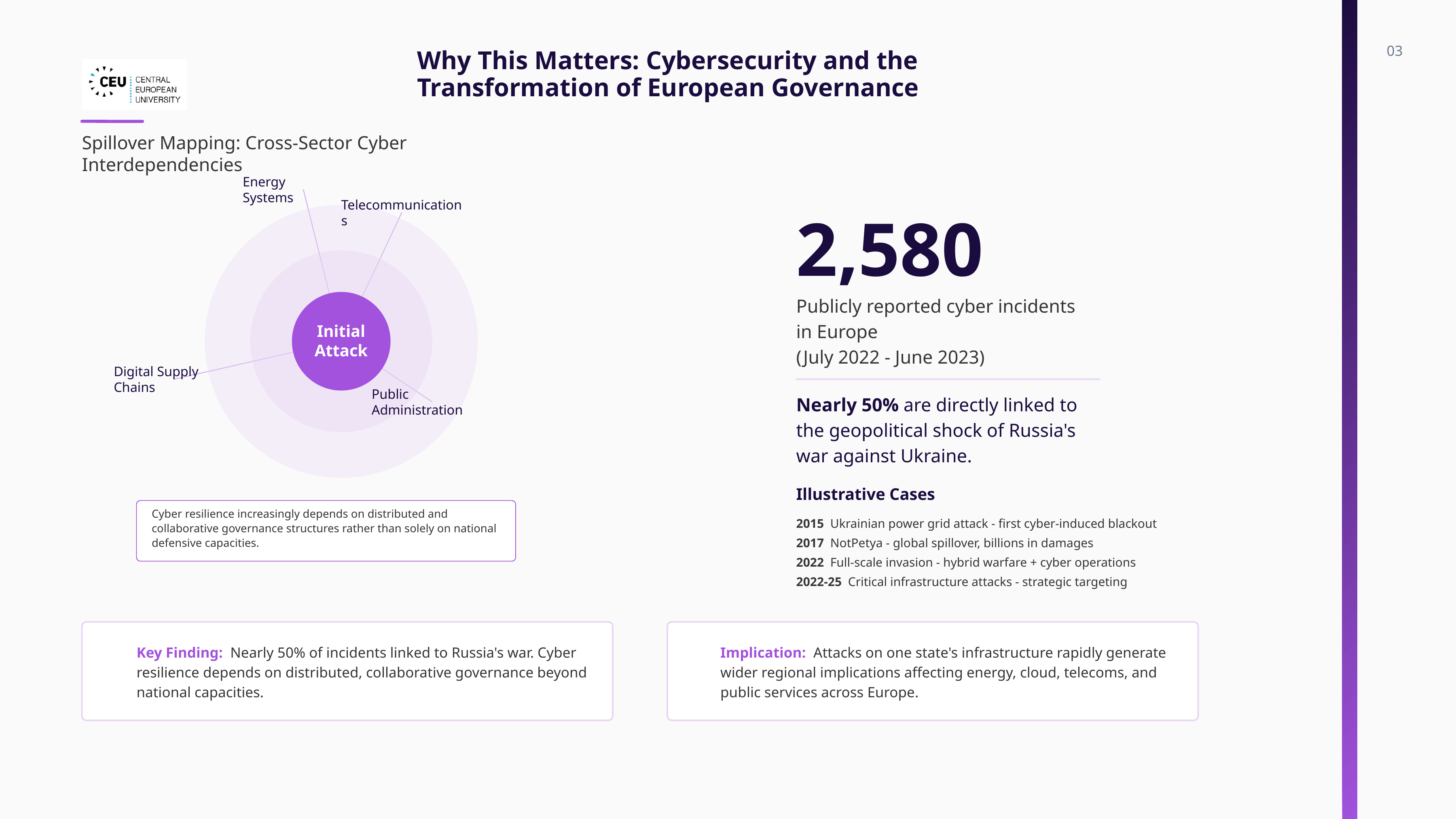
When Russian cyberattacks shut down parts of Ukraine's electricity grid in 2015, the incident was initially treated as a national security crisis affecting one country on Europe's eastern border. A decade later, those same attacks are increasingly understood differently. They exposed a broader European vulnerability.
For decades, European solidarity was primarily discussed through redistribution, burden-sharing, and crisis-response mechanisms. The Eurozone crisis, migration governance, and later the COVID-19 pandemic reinforced the idea that solidarity meant sharing economic costs and institutional responsibilities among European states. Yet cybersecurity introduces a different type of interdependence. Cyberattacks do not remain confined within national borders. Digital infrastructures, telecommunications systems, cloud services, energy networks, and research ecosystems are deeply interconnected. A cyberattack targeting one country can rapidly generate consequences across an entire region.
This transformation became particularly visible after the 2017 NotPetya cyberattack. Although initially directed at Ukrainian systems, the malware rapidly spread through international corporate networks, causing billions of dollars in damages worldwide. What happened in Ukraine did not remain in Ukraine. The attack demonstrated how deeply interconnected European and global digital systems had become.
The spillover dynamics of cyber conflict increasingly affect not only national digital infrastructures, but also broader European governance systems, including energy security, telecommunications, public administration, cloud infrastructures, and supply chains. The findings from this research demonstrate that cyber resilience increasingly depends on distributed and collaborative governance structures rather than solely on national defensive capacities.
This transformation creates an important analytical gap. Existing theories of European solidarity largely explain redistribution, burden-sharing, welfare governance, or emergency stabilization mechanisms. Cyber resilience scholarship, meanwhile, often focuses on deterrence, critical infrastructure protection, or national adaptation strategies. Yet neither literature fully captures how research cooperation, innovation governance, and technological development increasingly function as mechanisms through which states collectively build resilience under conditions of shared cyber vulnerability.
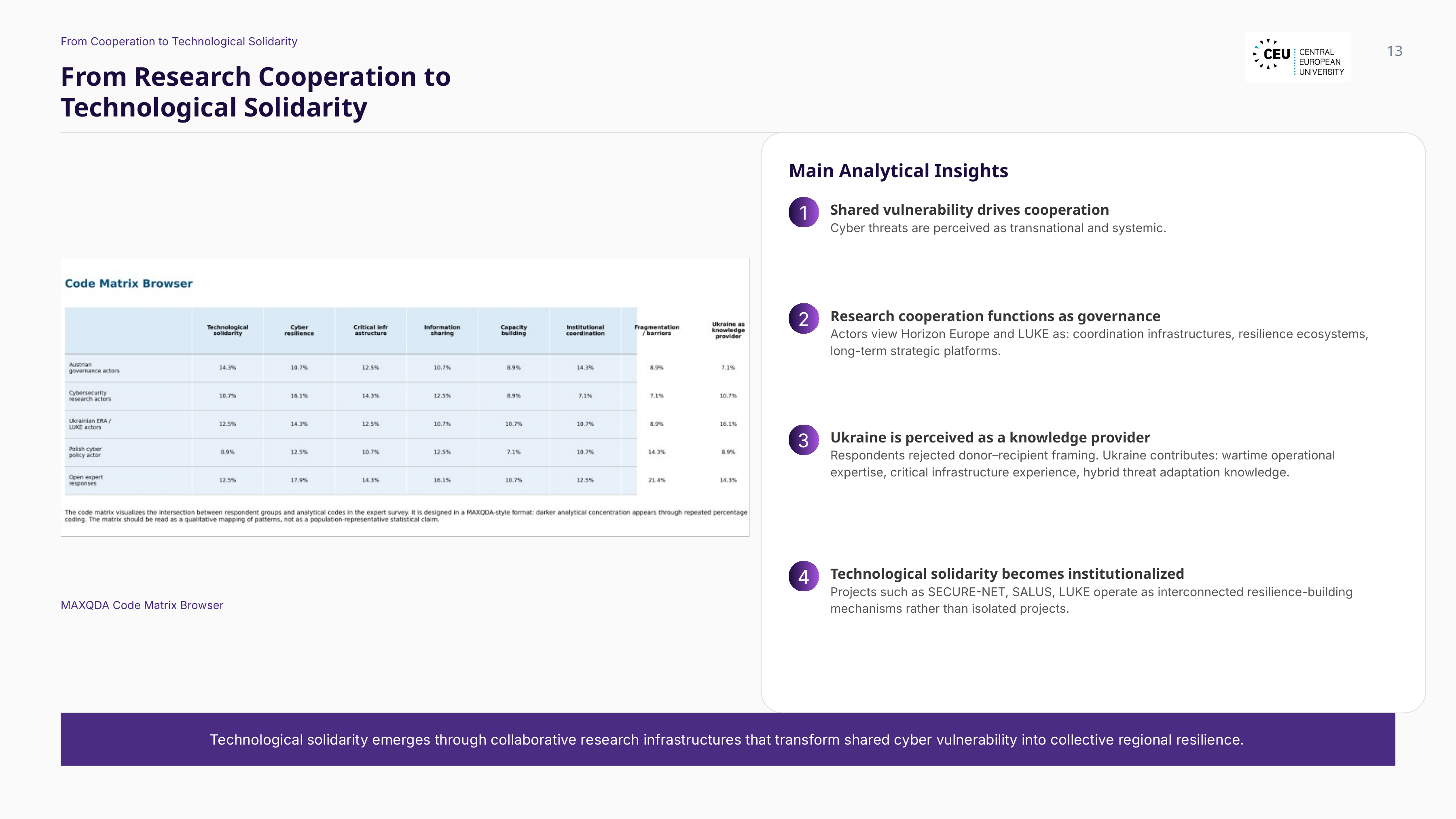
Technological solidarity describes institutionalized cooperation through which states exposed to shared strategic risks collectively build resilience by sharing knowledge, expertise, infrastructures, innovation capacities, and operational experience.
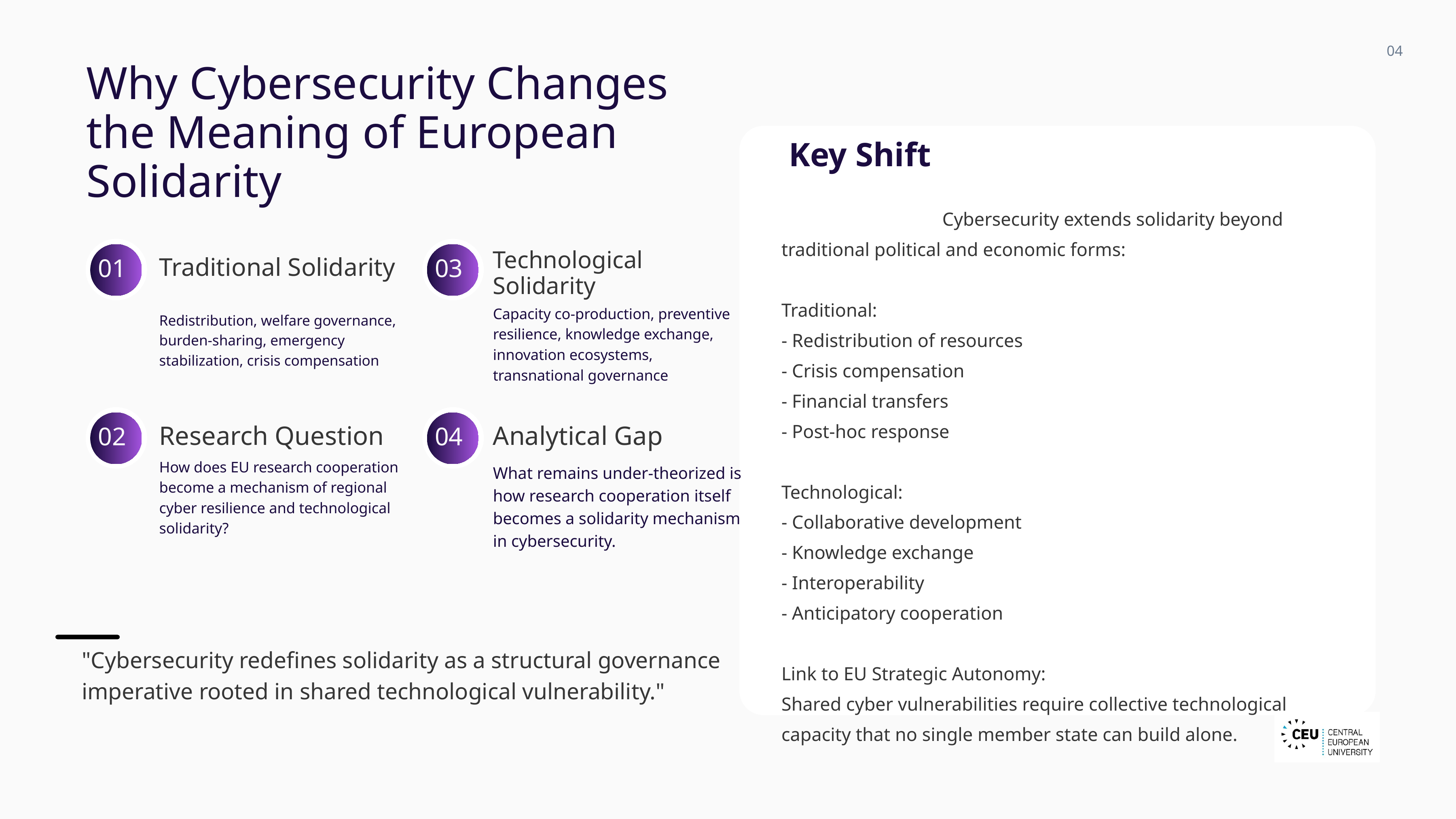
Unlike traditional solidarity, which primarily redistributes financial resources after crises occur, technological solidarity focuses on building shared capacities before and during crises. Its central mechanism is not compensation, but collaborative knowledge production. Its primary object is not only economic stabilization, but resilience. Its key actors are not only governments and EU institutions, but also universities, research centers, cybersecurity experts, infrastructure operators, innovation agencies, and private technology actors.
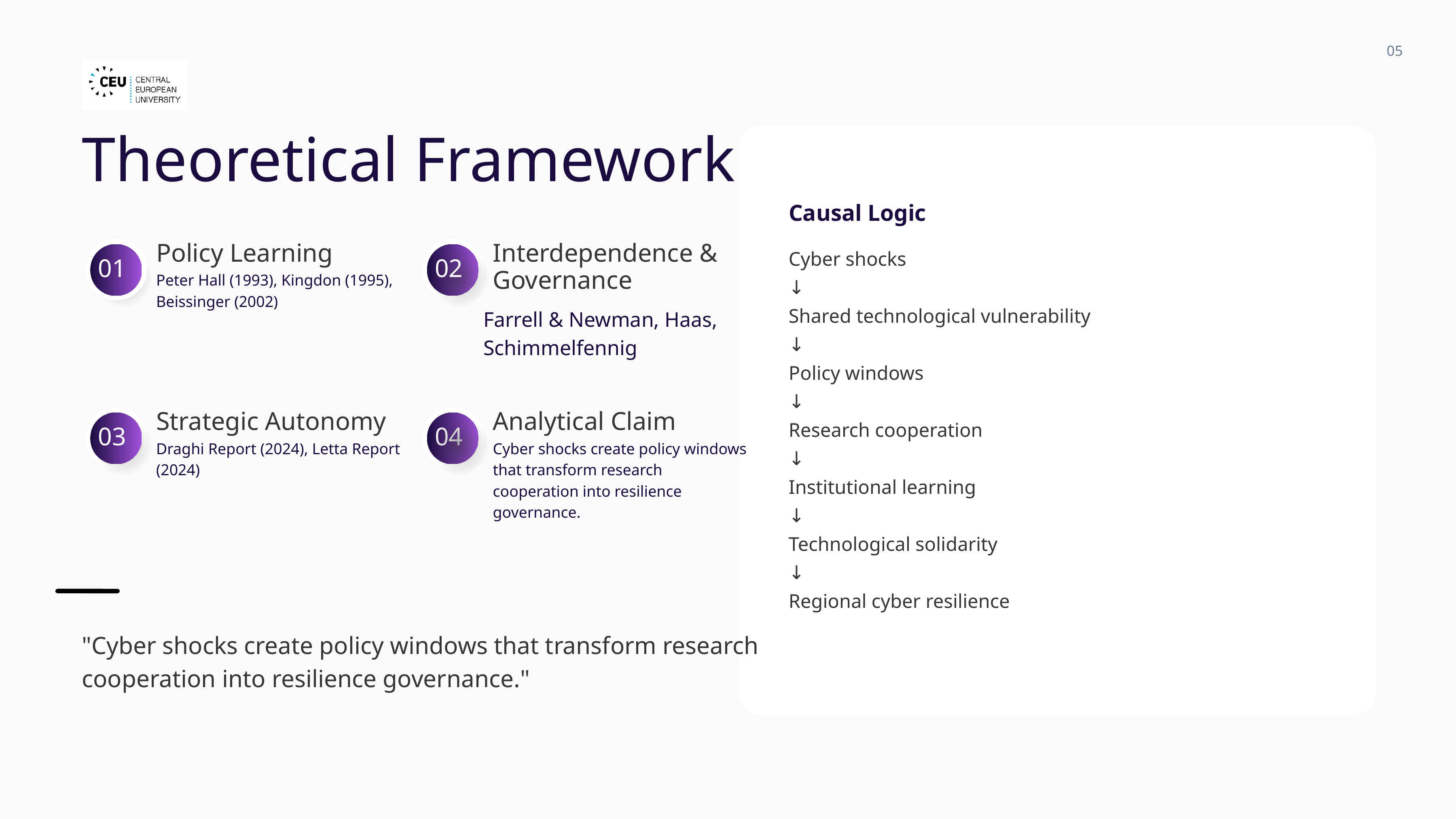
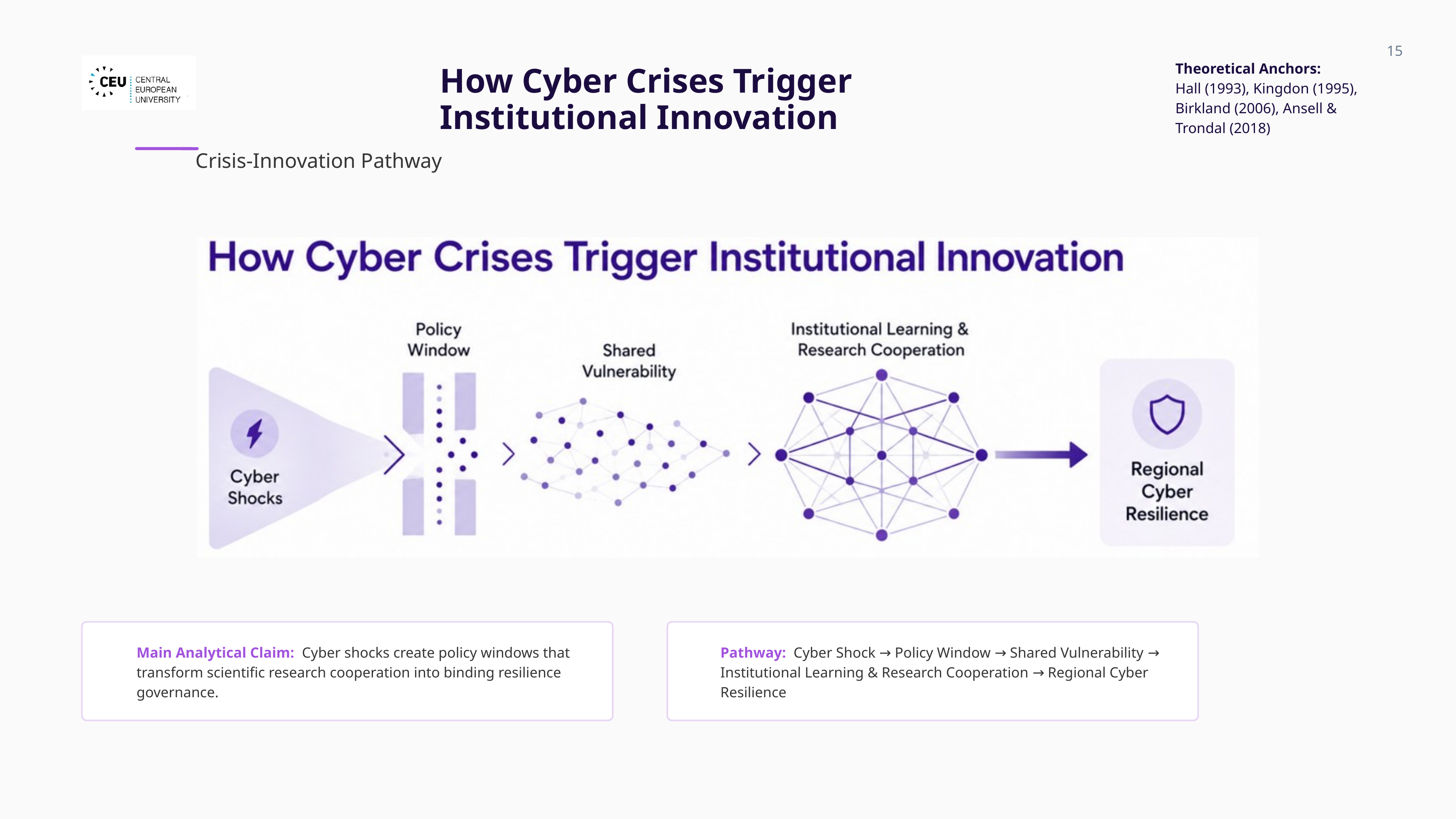
Drawing on Peter Hall, John Kingdon, Thomas Birkland, and Ansell & Trondal, this article conceptualizes cyber crises as catalysts for institutional learning and governance transformation. Repeated cyber shocks generate policy windows that subsequently transform research cooperation into resilience governance.
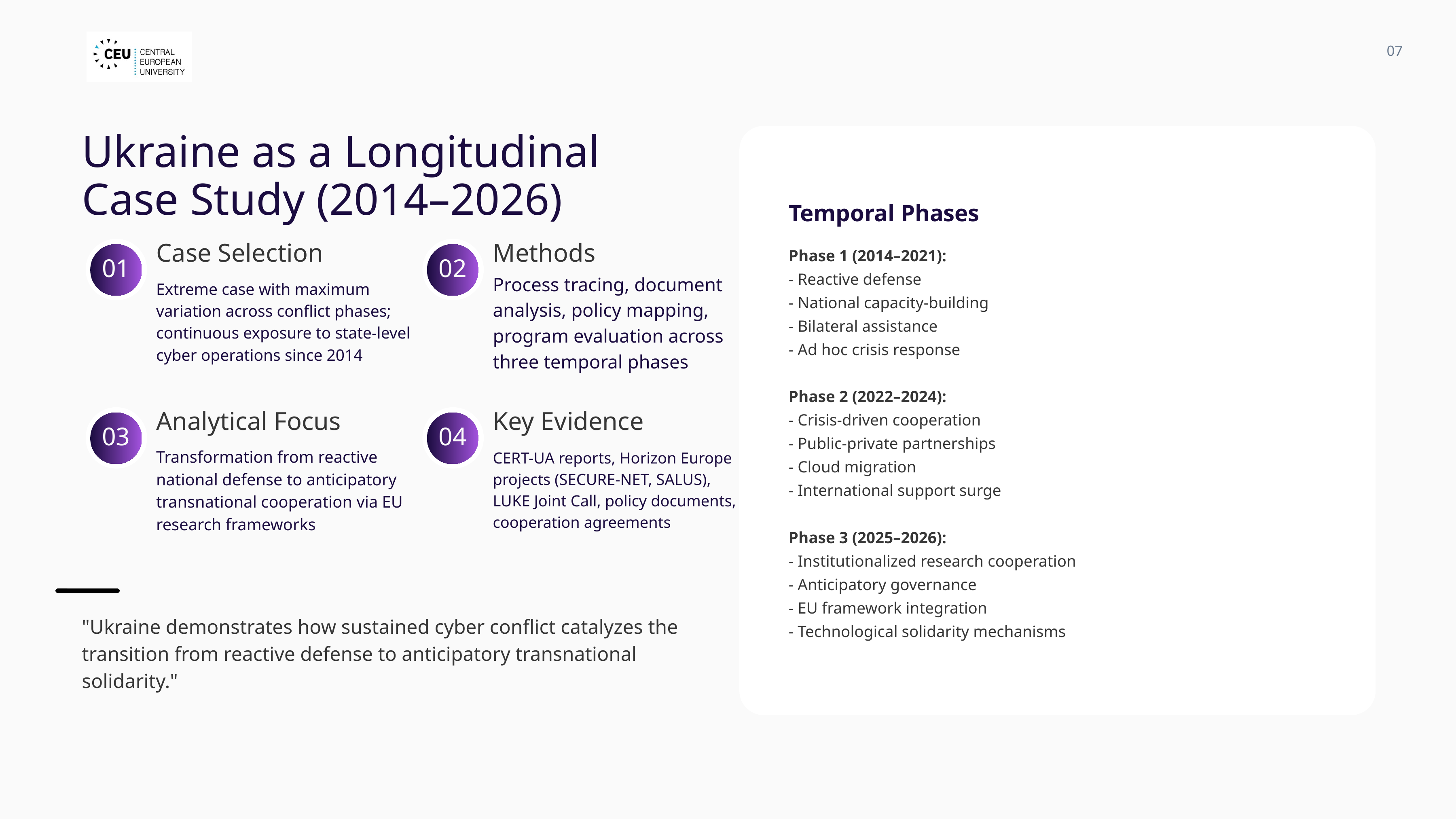
Ukraine demonstrates how sustained cyber conflict catalyzes the transition from reactive defense to anticipatory transnational solidarity. Since 2014, the country has moved through successive phases of cyber resilience: reactive defense and national capacity-building, crisis-driven international cooperation after the full-scale invasion, and institutionalized research cooperation through EU frameworks.
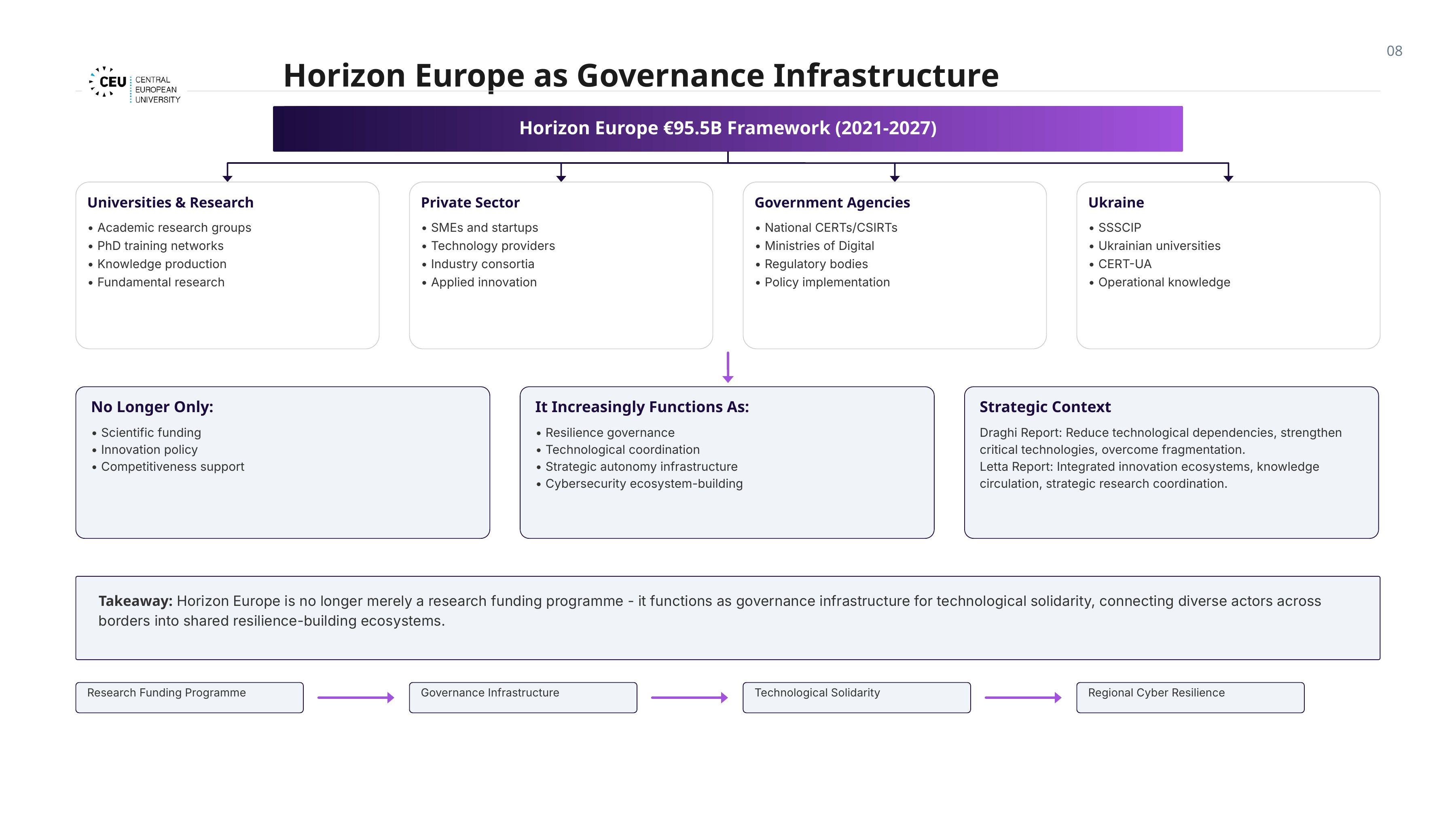
Over the last several years, the European Union has gradually transformed research cooperation into part of a broader resilience architecture. Horizon Europe - the EU's flagship research and innovation programme for 2021-2027 with a budget of approximately EUR 95.5 billion - increasingly functions not only as a scientific funding instrument, but also as a governance mechanism linking competitiveness, security, technological sovereignty, and resilience.
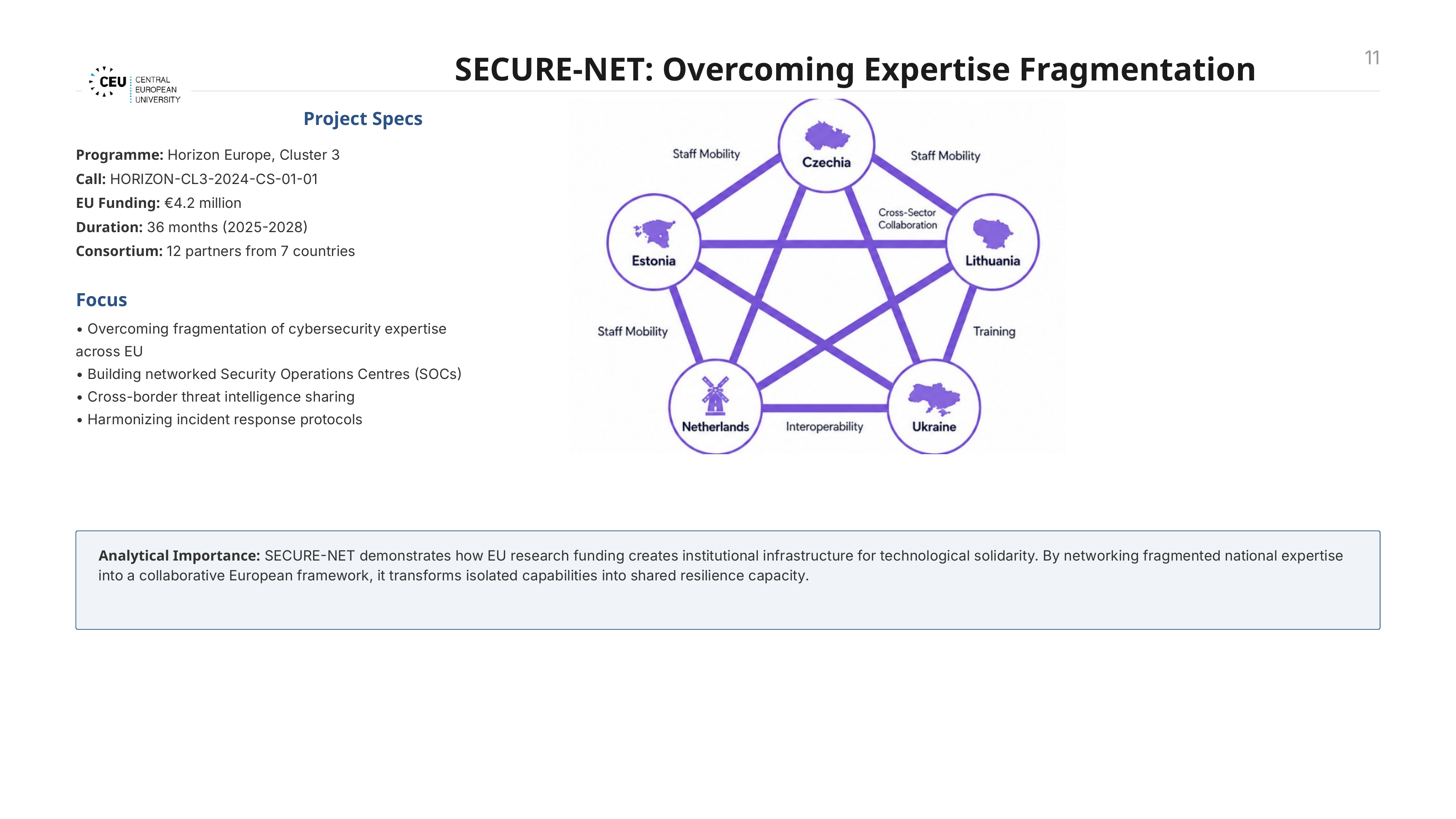
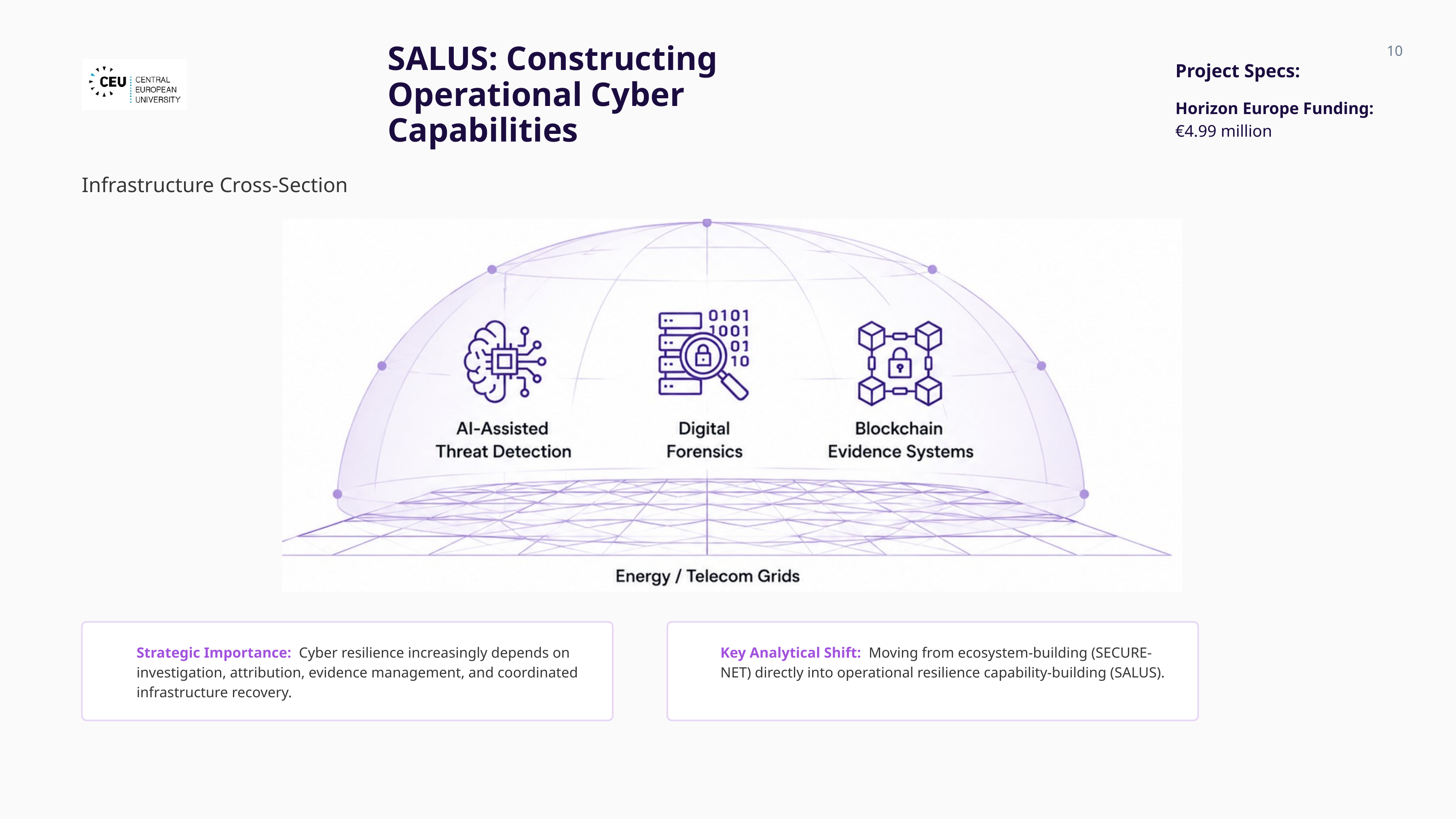
Projects funded under Horizon Europe demonstrate this transformation particularly clearly. They do not only generate technical outputs; they create institutional frameworks for cross-border learning, interoperability, and operational resilience.
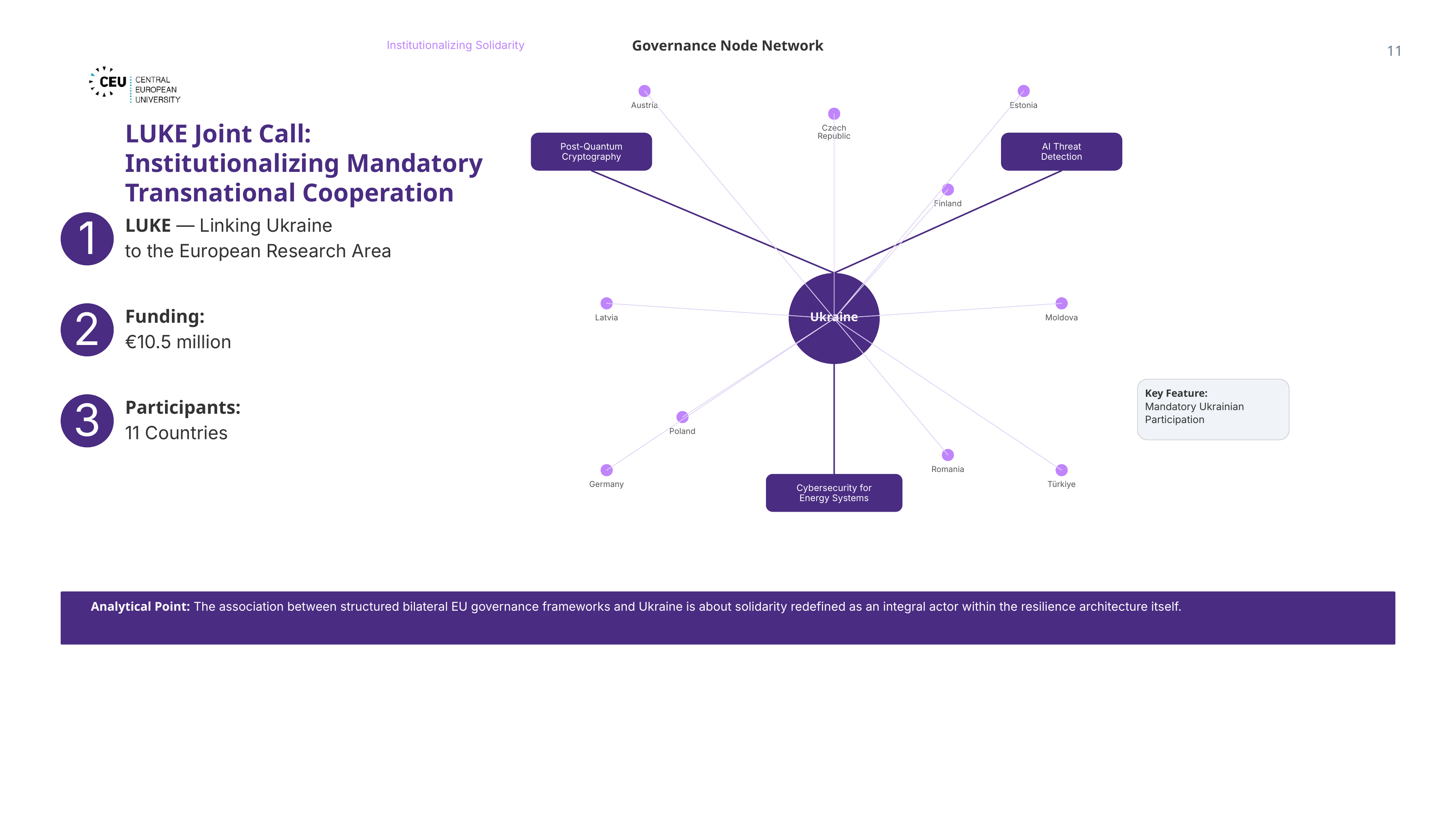
The LUKE Joint Call represents a further step toward institutionalizing technological solidarity through mandatory transnational cooperation frameworks integrating Ukraine directly into European resilience infrastructures.
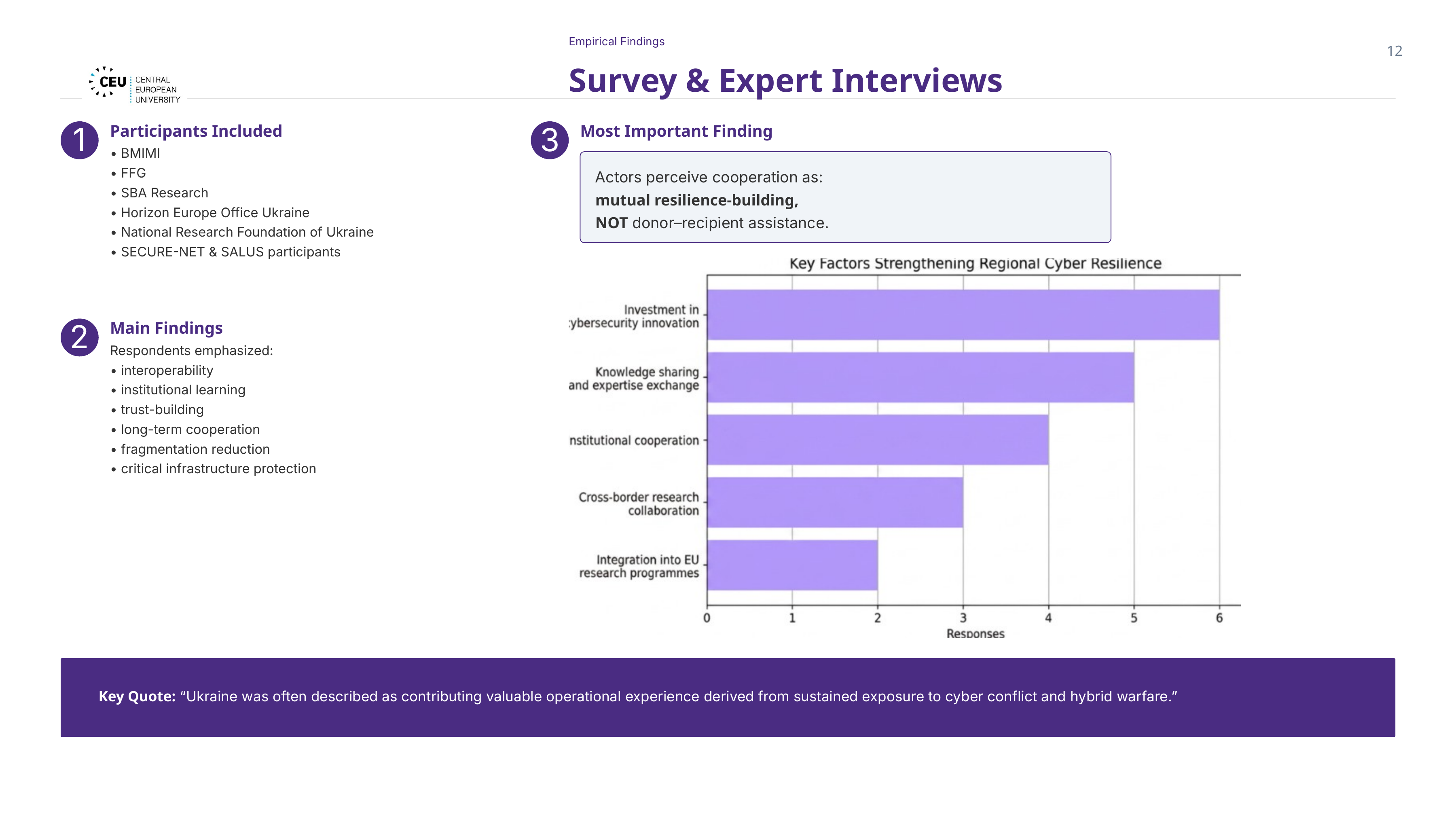
Ukraine's role within European cybersecurity governance increasingly reflects reciprocity rather than a one-directional donor-recipient relationship. Since 2014, Ukrainian institutions, infrastructure operators, cybersecurity specialists, and civil society actors have accumulated extensive operational experience responding to sustained hybrid warfare.
Ukraine was often described as contributing valuable operational experience derived from sustained exposure to cyber conflict and hybrid warfare.
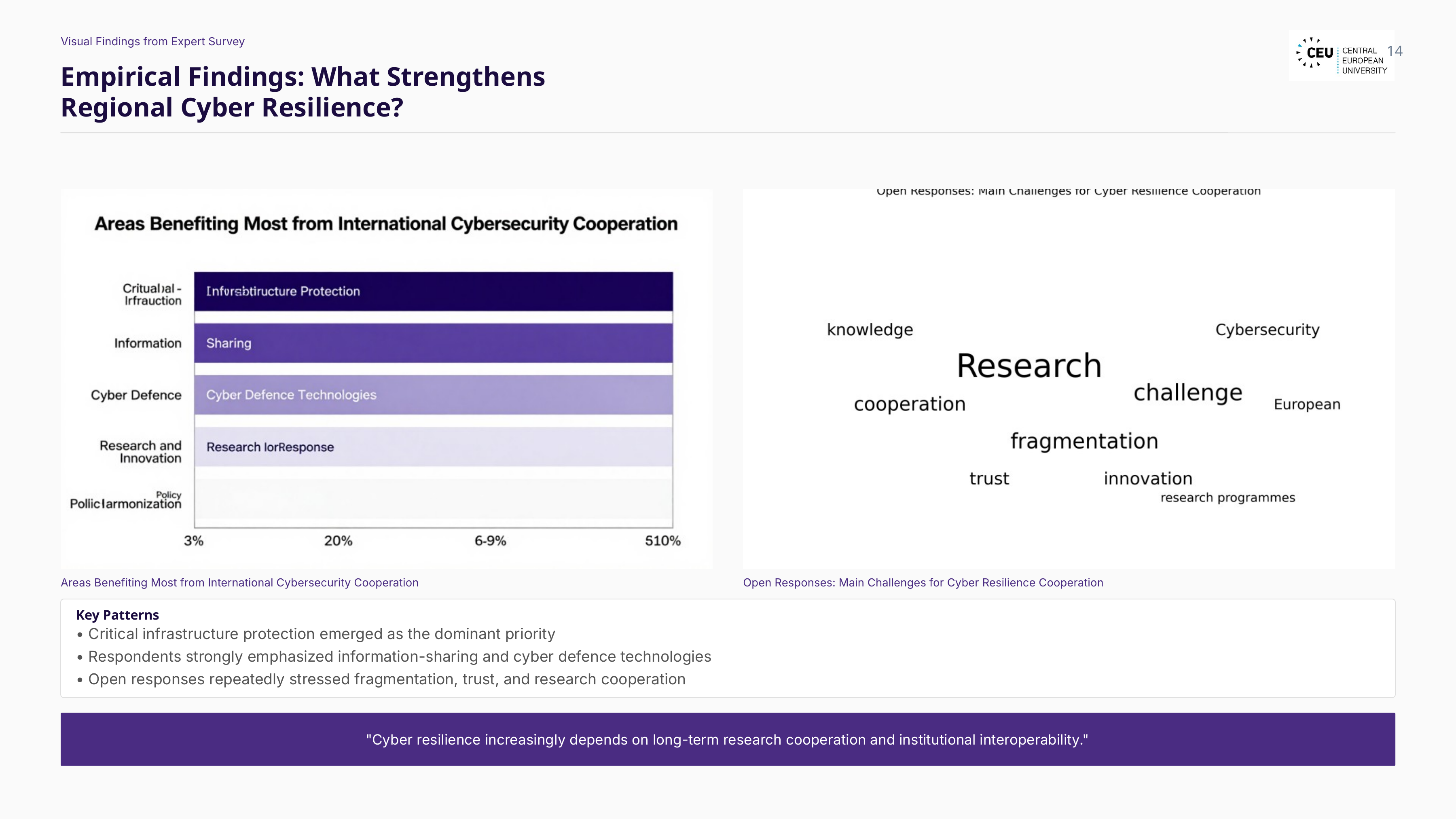
The implications extend far beyond cybersecurity alone. The logic of technological solidarity may become increasingly relevant in fields such as artificial intelligence governance, semiconductors, quantum technologies, digital infrastructure, energy resilience, and critical supply chains.
Europe's future resilience will likely depend not only on military capabilities or economic instruments, but also on the ability to organize long-term technological cooperation across borders. In this sense, Horizon Europe should not be understood merely as a research programme. It increasingly operates as a strategic governance infrastructure through which Europe organizes collective responses to shared technological vulnerabilities.
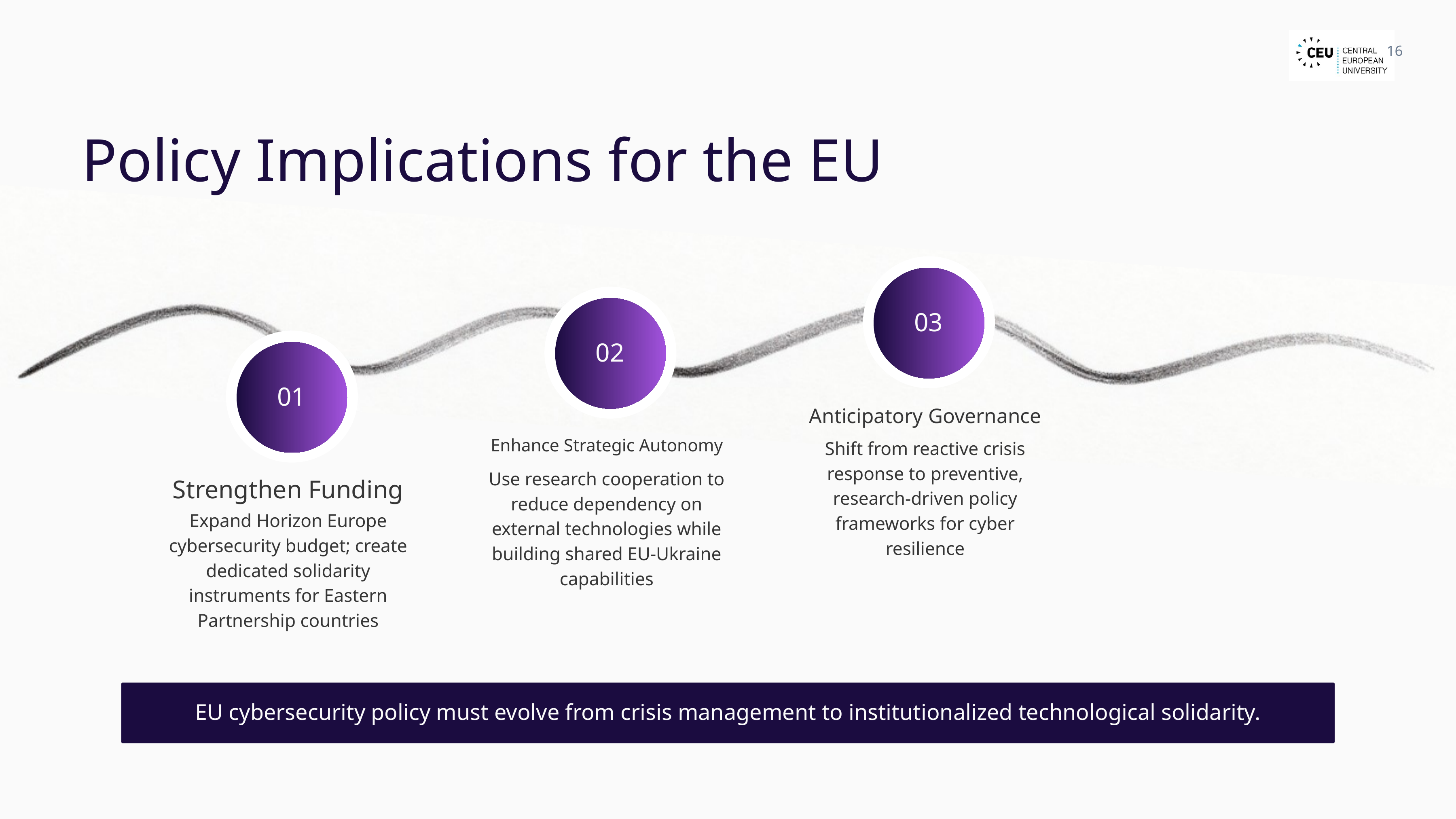
Key Analytical Insight
Horizon Europe increasingly operates not merely as a research funding programme, but as a broader resilience governance architecture linking cybersecurity, strategic autonomy, innovation ecosystems, and transnational technological cooperation.
Cybersecurity is gradually reshaping the meaning of solidarity in Europe. What emerges instead is a new model of resilience governance based on technological cooperation, institutional learning, cross-border innovation, and shared strategic adaptation.
Technological solidarity therefore represents more than a temporary response to crisis. It increasingly becomes part of Europe's long-term resilience architecture.
And perhaps most importantly, it demonstrates that in the twenty-first century, resilience is increasingly collective - and solidarity increasingly technological.
Draghi, Mario. The Future of European Competitiveness. European Commission, 2024.
ENISA. Threat Landscape Report 2023. European Union Agency for Cybersecurity, 2023.
European Commission. Cybersecurity Strategy for the Digital Decade. Brussels, 2020.
European Commission. Horizon Europe Strategic Plan 2025-2027. Brussels, 2024.
European Commission. Horizon Europe 2021-2027. Brussels, 2021.
FFG. LUKE Joint Call: Linking Ukraine to the European Research Area. Vienna, 2026.
Greenberg, Andy. Sandworm: A New Era of Cyberwar and the Hunt for the Kremlin's Most Dangerous Hackers. New York: Doubleday, 2019.
Kerr, Jaclyn A. The Cyber War That Wasn't: Russia's Failure Against Ukraine. Washington, DC: Carnegie Endowment for International Peace, 2023.
Letta, Enrico. Much More Than a Market. Brussels, 2024.
Microsoft. Defending Ukraine: Early Lessons from the Cyber War. Microsoft Digital Security Unit, 2022.
SECURE-NET Project Documentation, CORDIS Database.
SALUS Project Documentation, CORDIS Database.

.svg)