
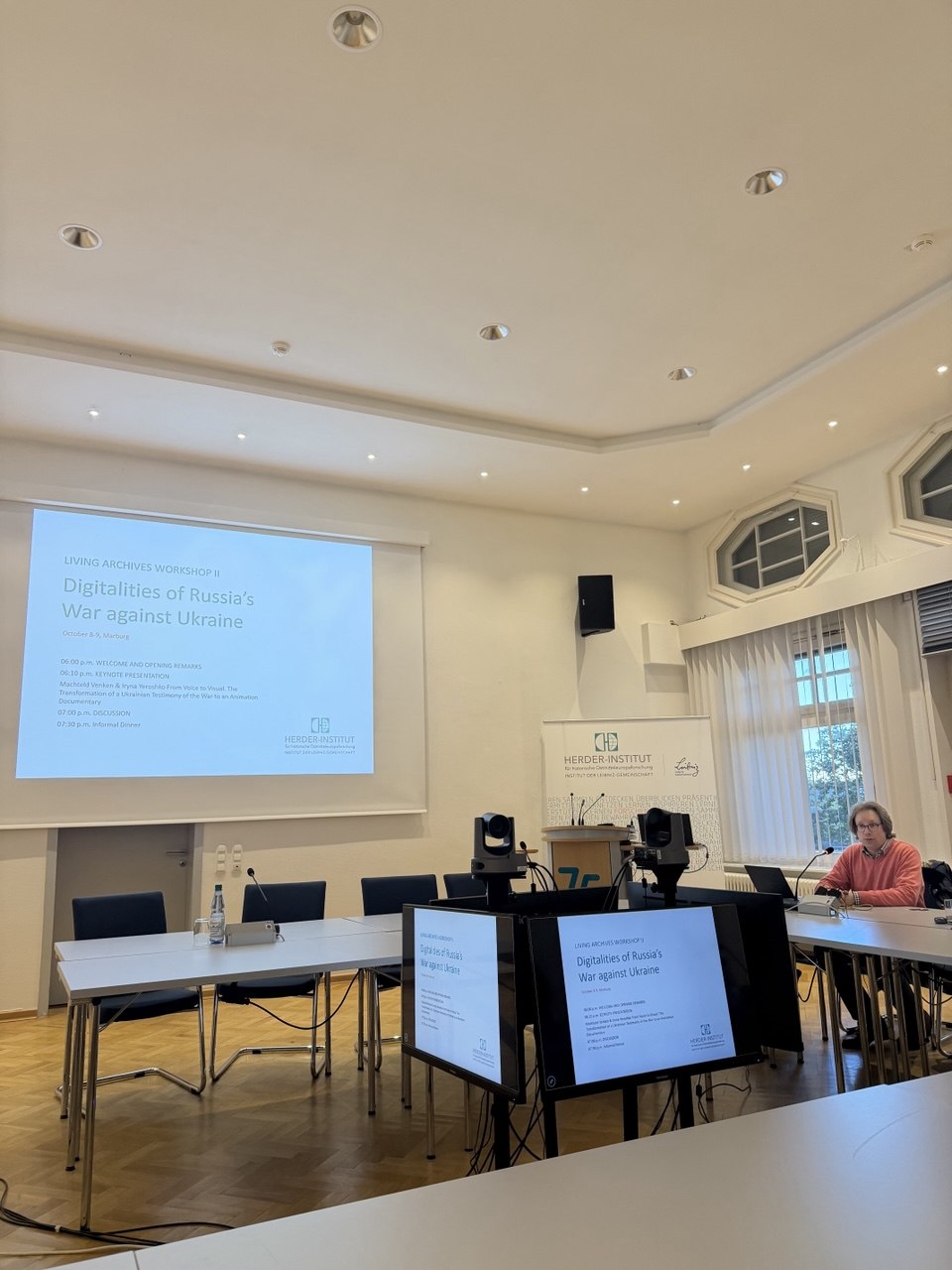
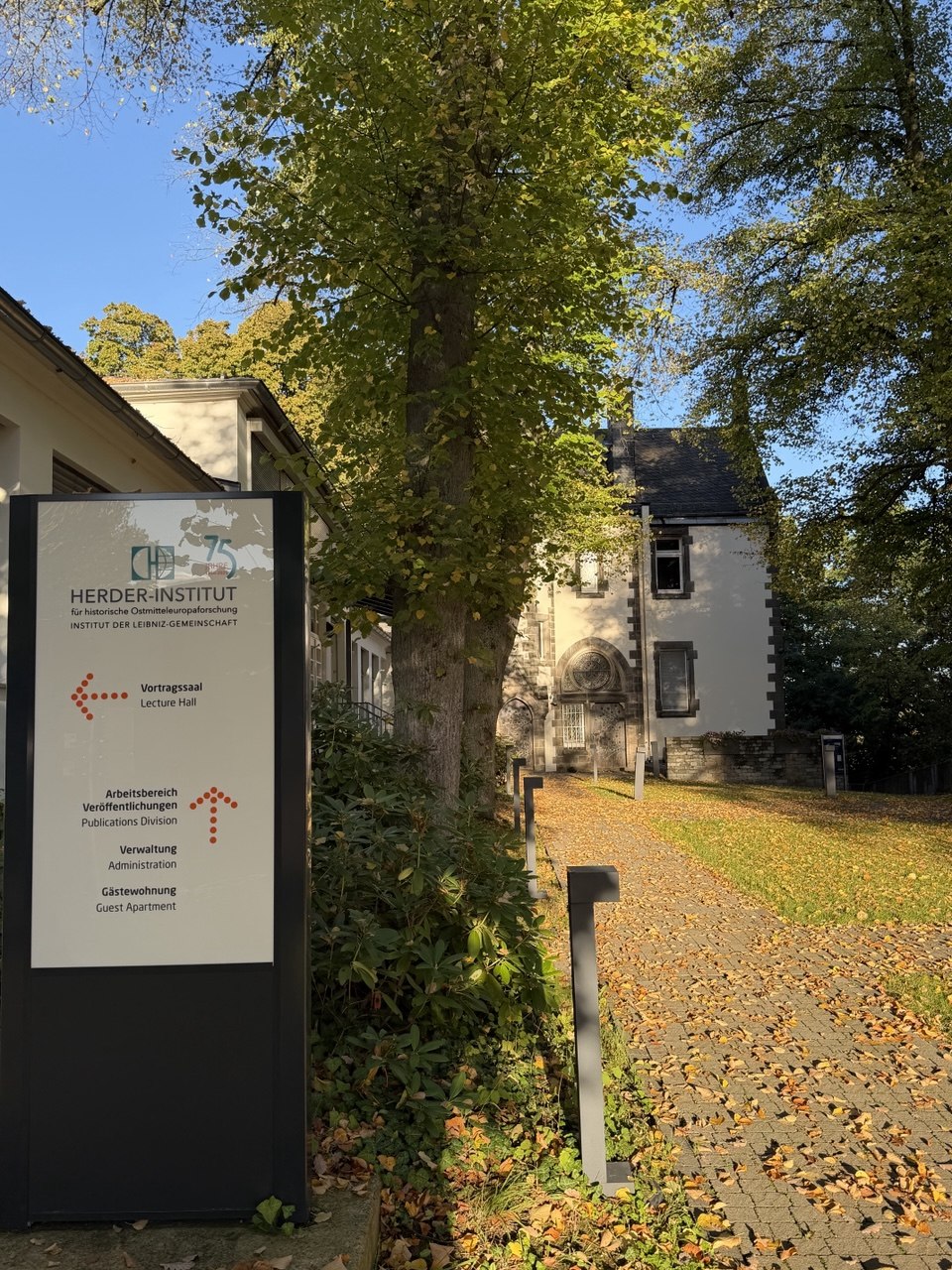
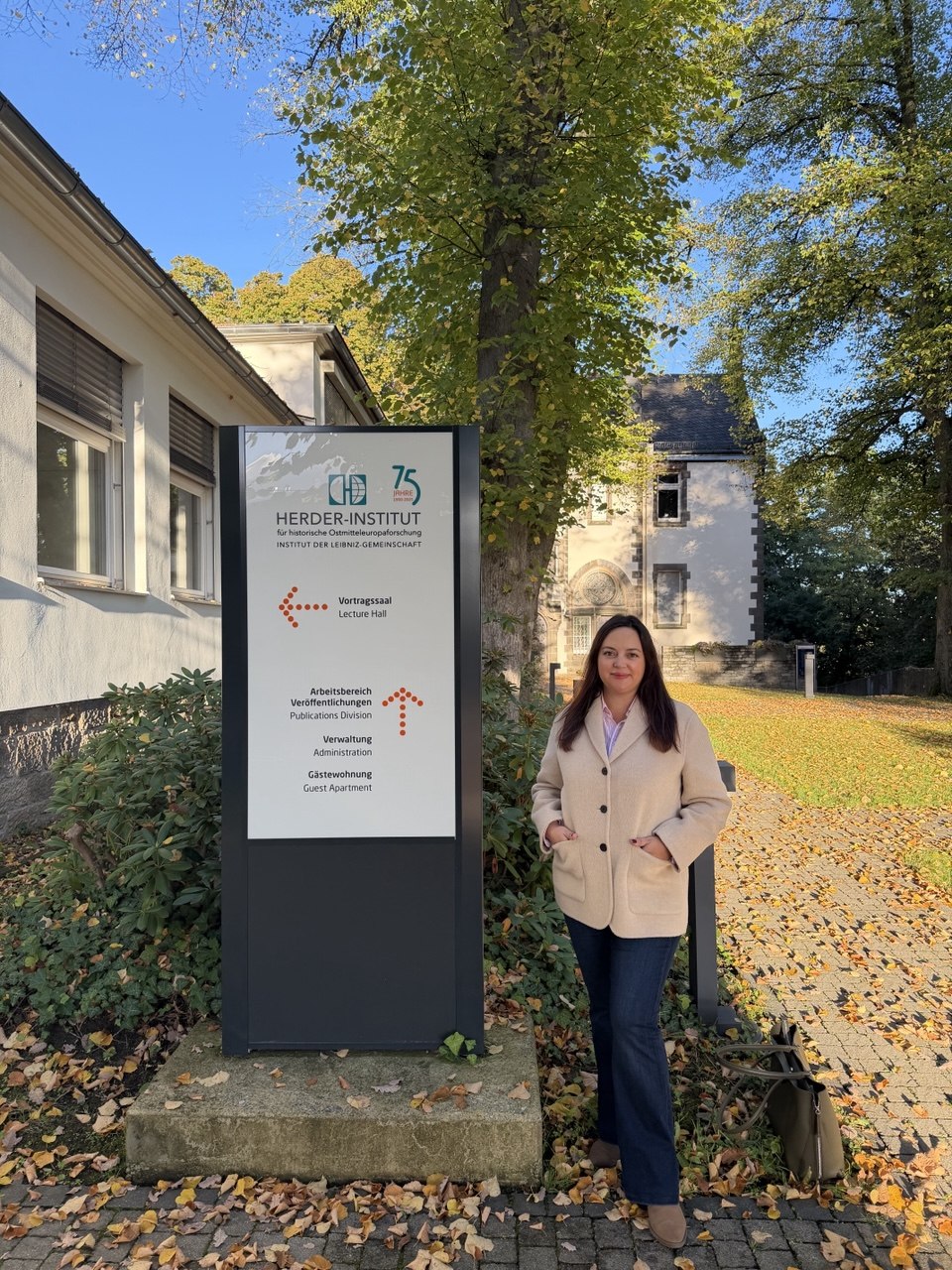
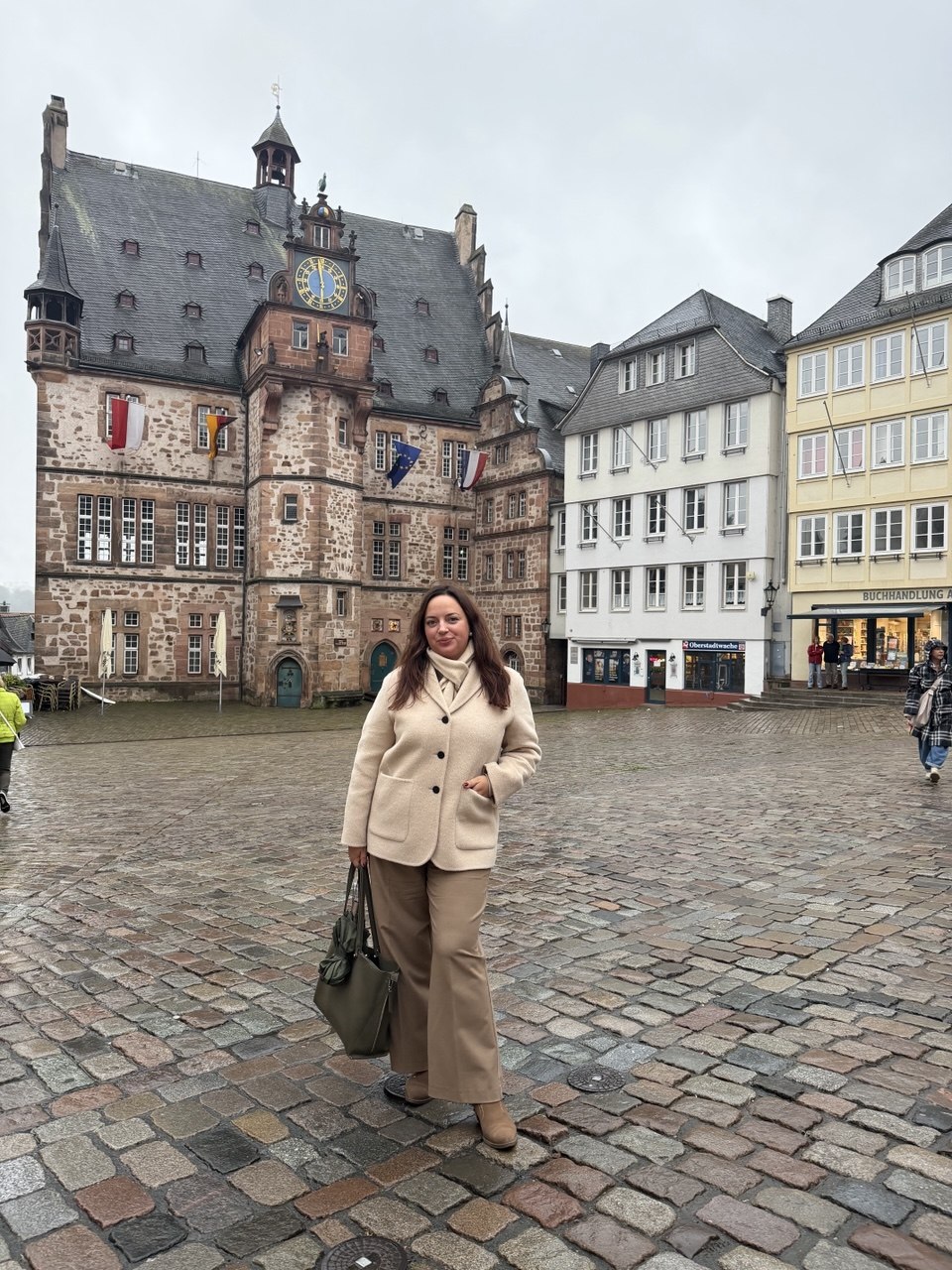
On 8–9 October 2026, the Herder Institute for Historical Research on East Central Europe in Marburg, Germany, hosted Digitalities of Russia’s War Against Ukraine: Living Archives Workshop II. The international workshop explored the digital dimensions of documenting Russia’s war against Ukraine, the preservation of testimonies, and the evolving role of living archives. Ganna Sarybaieva, Doctor of Law and Associate Professor at the National University “Odesa Law Academy,” Founder of the Austrian NGO Open Dialogue Platform, and a LivArch Fellow, contributed to the programme with a presentation on the legal status of wartime documentary materials and the limits of archiving.
War transforms not only human lives, cities, and societies. It also reshapes the ways in which we preserve memory, document lived experiences, and transmit testimonies to future generations. In the digital age, these processes have acquired particular significance. Documents, oral histories, audiovisual materials, and digital collections are becoming more than sources of historical knowledge: they are essential to collective memory, the protection of human rights, and the pursuit of justice.
These questions were at the heart of the workshop organised by the Herder Institute as part of the Living Archives research initiative. Bringing together scholars, legal experts, historians, sociologists, and digital humanities researchers, the event provided a platform for examining how experiences of war can be documented, how testimonies can be preserved, and how public accessibility can be reconciled with ethical obligations and the protection of personal data.
The workshop programme addressed several interconnected dimensions of contemporary research into wartime documentation.
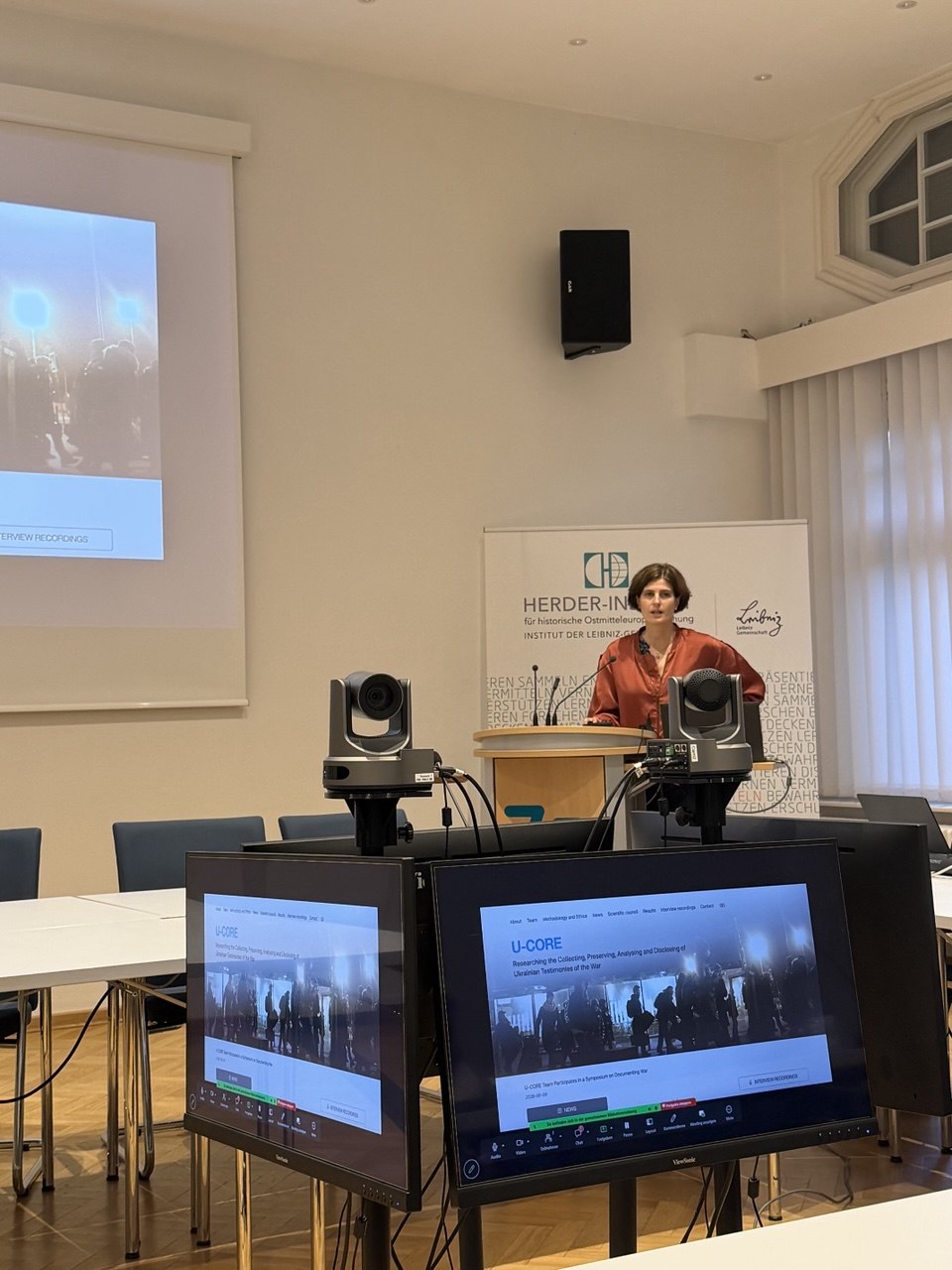
The first day opened with a keynote presentation by Machteld Venken and Iryna Yeroshko entitled From Voice to Visual: The Transformation of a Ukrainian Testimony of the War to an Animation Documentary. The presentation examined Ember, an animated documentary developed within the U-CORE project at the Luxembourg Centre for Contemporary and Digital History (C²DH), University of Luxembourg.
The film transforms the testimony of a Ukrainian woman who was forced to flee her home following Russia’s full-scale invasion into an animated narrative. This example demonstrated how innovative forms of digital storytelling can make individual experiences of war accessible to wider audiences while raising important questions about representation and interpretation.
How can the authenticity of a testimony be preserved when it is translated into visual form? How do sound, colour, rhythm, and imagery shape the audience’s understanding of lived experience? Where is the boundary between creative interpretation and the responsible representation of another person’s suffering?
These questions set the tone for a broader discussion about the relationship between technology, memory, and the human experience of war.
The second day focused on emerging practices in testimony stewardship, military funerals as forms of living memory, the legal dimensions of war documentation, and the potential of digital technologies to support the documentation of war crimes.
Particular attention was paid to the temporal and social dimensions of handling sensitive information, the ethics of archiving, the protection of personal data, and the legal limits governing the preservation and use of documentary materials.
Together, these discussions highlighted an essential point: an archive is not merely a repository of information. It is a complex system of relationships between witnesses, researchers, documents, technologies, and society.
As part of Session II, Legal Dimension of War Documentation: Between Evidence and Archive, Ganna Sarybaieva delivered a presentation entitled “From Working Records to Living Archives: The Legal Status of Wartime Documentary Materials and the Limits of Archiving.”
Her presentation addressed the legal implications of transforming documentary materials created or collected during wartime into archival sources that preserve evidence of events, human experiences, and human rights violations.
A document that initially exists as a working record, a digital file, a personal testimony, or material collected for a research project may eventually acquire significance for historical scholarship, collective memory, or the legal investigation of particular events. This transition, however, is neither automatic nor free from legal constraints.
How can testimonies be preserved over the long term without infringing the rights of the people concerned? What legal and ethical requirements must be considered when establishing digital wartime archives? How can the public interest in documenting war crimes be reconciled with the protection of personal data, privacy, and the safety of witnesses?
These questions are particularly urgent for Ukraine, where the documentation of Russia’s aggression and its consequences is taking place while the war continues. Government institutions, human rights organisations, academic institutions, journalists, civil society initiatives, and individual citizens are all contributing to this process.
Addressing these challenges requires an interdisciplinary approach. Beyond the rules governing the storage and use of documents, researchers must consider the circumstances in which materials were created, the purposes for which information was collected, its sensitivity, the rights of those who provided it, and the potential consequences of its subsequent disclosure.
In this context, the concept of living archives offers a broader understanding of archiving: not simply as the preservation of records, but as an ongoing process of safeguarding, interpreting, and responsibly using testimonies that remain meaningful to society long after an individual research project has ended.
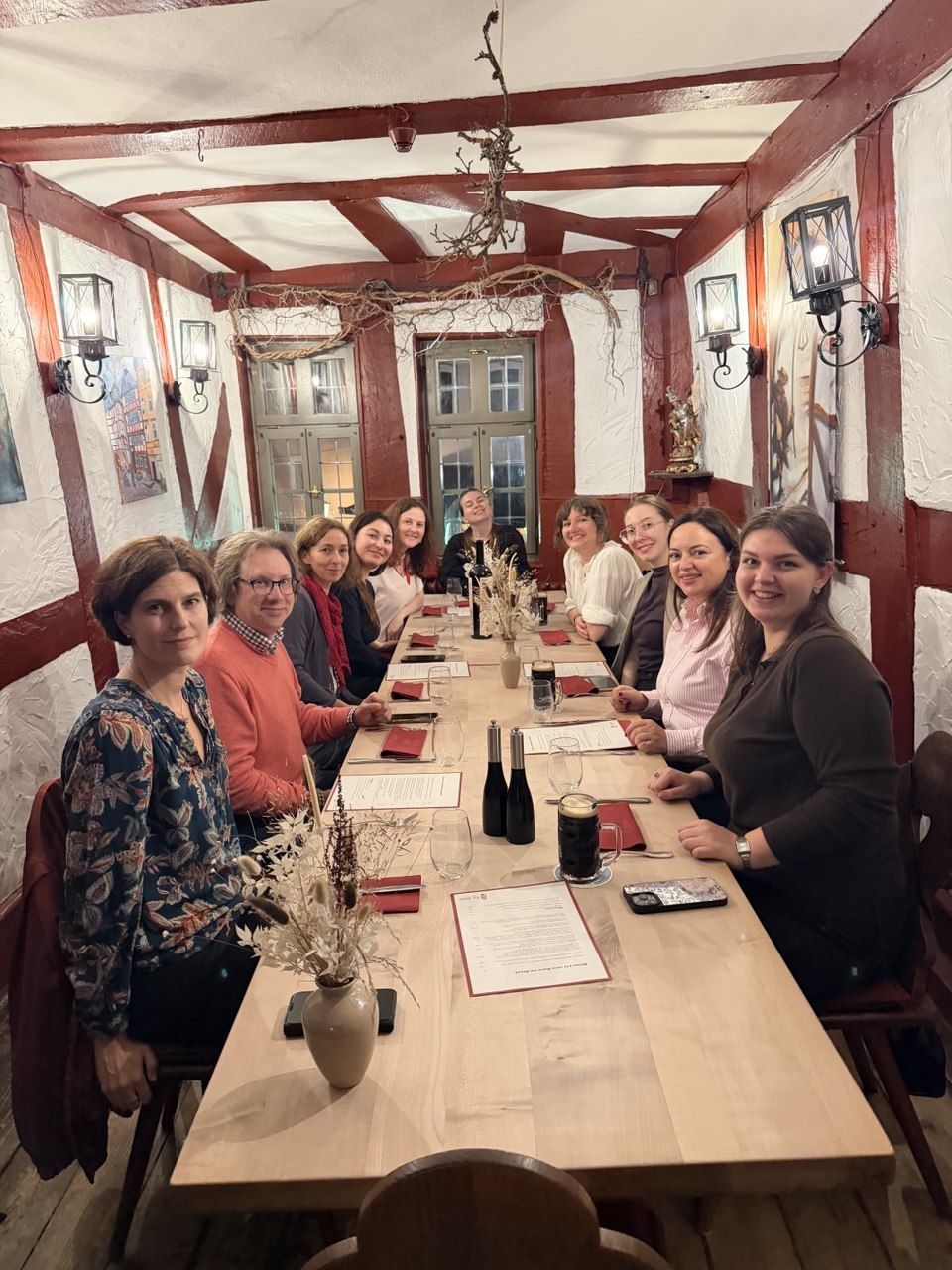
The workshop brought together participants from diverse academic and professional backgrounds, creating opportunities to exchange research methods, practical experience, and interdisciplinary perspectives.
The presentations explored digital war documentation, oral history, sociology, memory studies, international law, the ethics of working with sensitive sources, and digital approaches to representing human experience.
Such interdisciplinary collaboration is particularly important for research into Russia’s war against Ukraine. Documenting war involves far more than collecting facts. It also requires examining how those facts are preserved, interpreted, made accessible to different audiences, and used to support the protection of human rights.
For Ganna Sarybaieva, participation in the LivArch programme provided an opportunity to deepen her research into the legal dimensions of wartime documentation and strengthen professional dialogue with the international academic community.
This research also connects with the work of Open Dialogue Platform (ODP), an Austrian civil society organisation founded to promote human rights, the rule of law, democratic resilience, and international interdisciplinary dialogue.
Bringing together legal expertise, digital archive research, and civil society initiatives creates opportunities for further cooperation between Ukrainian and European researchers and for developing approaches to the responsible preservation of documentary evidence of war.
The discussions in Marburg demonstrated that the future of archives depends not only on advances in data storage and information-processing technologies.
Legal safeguards, ethical principles, respect for human dignity, and an awareness of our obligations to those whose stories become part of collective memory are equally essential.
For Ukraine, living archives offer a means of preserving the diversity of testimonies about the war, ensuring their responsible use, and creating a foundation for future historical, social, and legal research.
Preserving testimonies is not merely about documenting the past. It is also about taking responsibility for how future generations will understand the war, its human cost, and the meaning of justice.
Ganna Sarybaieva’s participation in the Herder Institute’s research programme forms part of her continuing academic work at the intersection of law, human rights, and interdisciplinary research. It also contributes to bringing Ukrainian experience and legal perspectives into the wider European academic conversation.
https://www.herder-institut.de/de/aktuelles/veranstaltungen/digitalities-russias-war-against-ukraine-living-archives-workshop-ii
https://www.livarch.org/
https://www.livarch.org/en/fellowships/


.svg)