
As Europe continues to navigate an era of overlapping crises, the concept of solidarity is undergoing a profound transformation. Once primarily associated with social cohesion and redistribution, solidarity is increasingly emerging as a strategic response to shared vulnerabilities, geopolitical instability, and transnational risks.
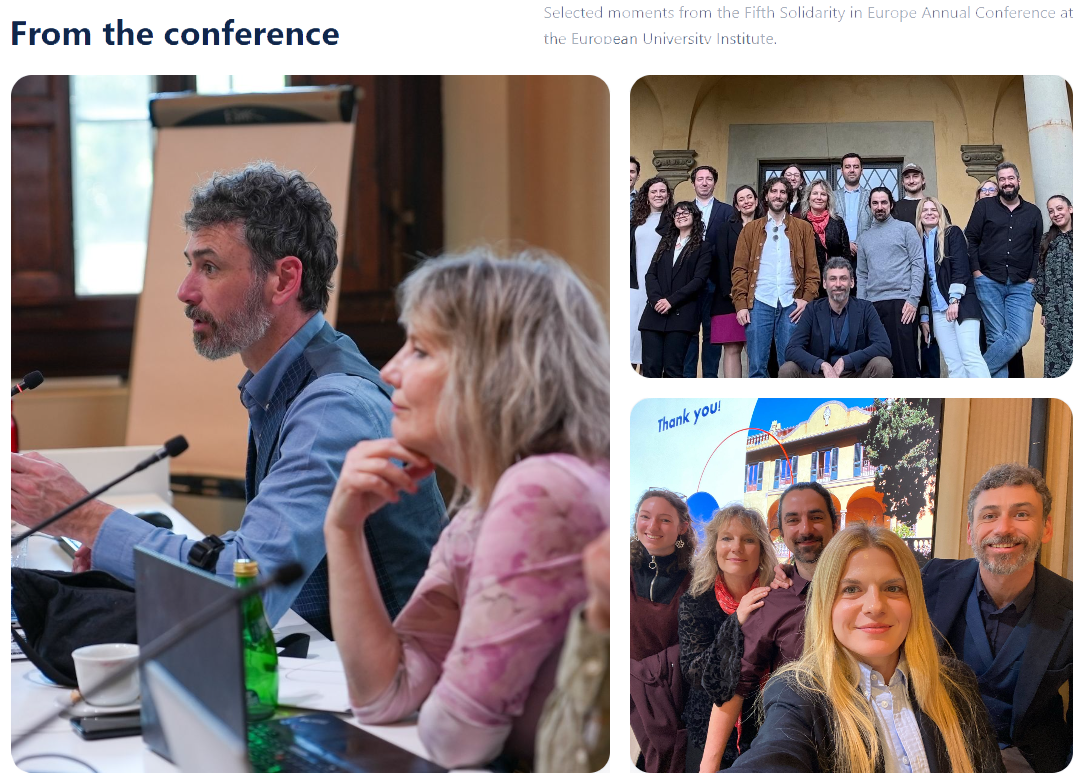
These questions were at the center of the Fifth Annual Conference of the Solidarity in Europe project, held at Villa Schifanoia and organized by the European Governance and Politics Programme at the Robert Schuman Centre for Advanced Studies of the European University Institute in Florence.
The conference brought together scholars from across Europe to discuss how solidarity evolves under conditions of permanent crisis. Panels addressed topics ranging from public opinion and migration governance to democratic resilience, identity formation, constitutional foundations of solidarity, and the broader consequences of Russia’s war against Ukraine.
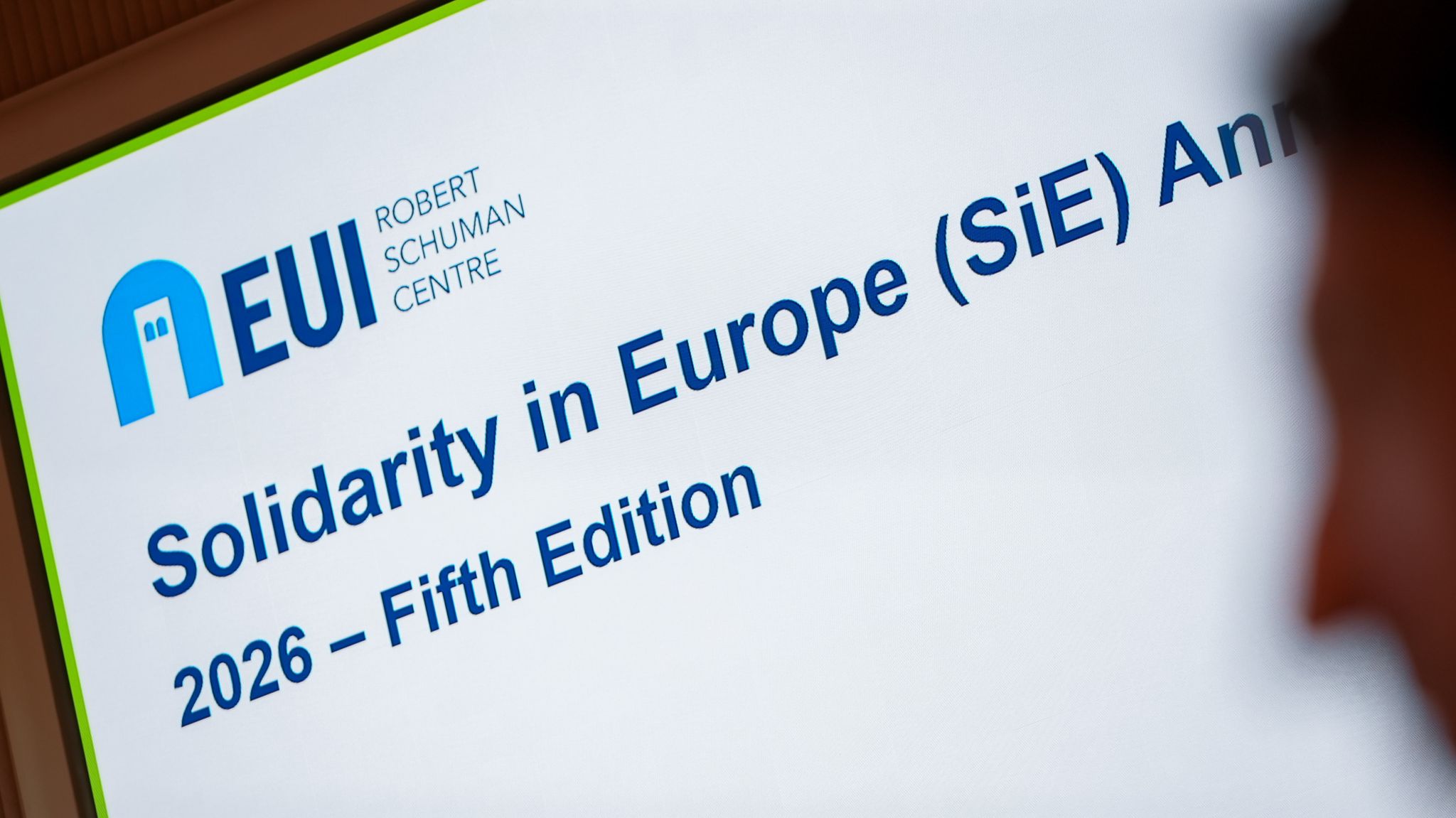
A major highlight of this year’s event was the presentation of the Solidarity in Europe Trendfile 2018–2025, one of the most comprehensive longitudinal datasets on public attitudes toward cross-border solidarity in Europe. Covering seventeen EU Member States and the United Kingdom, with approximately 20,000 respondents per survey wave, the project provides a unique perspective on how Europeans perceive responsibility-sharing and collective responses to crises.
Among the participants was Solomiia Beska, Open Dialogue Platform expert, researcher affiliated with the Democracy Institute of Central European University, and legal scholar specializing in cybersecurity governance, resilience, and European cooperation.
During the conference, Beska presented her paper, “Technological Solidarity and the Construction of Regional Cyber Resilience: Ukraine and European Research Cooperation.”
The presentation examined how the European Union increasingly employs research and innovation cooperation as a mechanism for strengthening regional cyber resilience in response to hybrid threats and geopolitical uncertainty.
Technological solidarity helps explain how Europe builds resilience not only through political declarations, but through research partnerships, innovation ecosystems, knowledge exchange, and shared technological capacity.
Building on recent research conducted within European innovation and cybersecurity networks, the paper introduced the concept of technological solidarity: a form of institutionalized cooperation through which states exposed to shared cyber vulnerabilities collectively build resilience through research partnerships, technological development, innovation ecosystems, and knowledge exchange.
Drawing on empirical evidence from Horizon Europe, SECURE-NET, SALUS, and the LUKE Joint Call, the research argued that these initiatives represent more than research funding instruments. Rather, they constitute an emerging governance model where cybersecurity, resilience, innovation policy, competitiveness, and strategic autonomy increasingly intersect.
The discussions throughout the conference reflected a broader shift in contemporary European governance. Across multiple policy fields, including cybersecurity, energy security, migration, and public health, solidarity is increasingly understood not merely as a response to crises, but as a mechanism for building collective preparedness and resilience before crises occur.
The interdisciplinary nature of the conference demonstrated the growing importance of connecting insights from political science, law, sociology, governance studies, and security research to understand the challenges facing Europe today.
The event concluded with a shared recognition that solidarity remains one of the key foundations of European cooperation. Yet its future relevance will depend on how effectively European institutions and societies can adapt solidarity to new realities characterized by technological interdependence, geopolitical uncertainty, and increasingly complex forms of vulnerability.
As the debates in Florence demonstrated, understanding solidarity today means understanding resilience itself.
If resilience is becoming the new language of European governance, solidarity is increasingly becoming one of its most important infrastructures. The Fifth Solidarity in Europe Annual Conference showed that solidarity is not only a moral principle, but also a practical framework for preparing Europe for shared risks in an age of permanent crisis.

.svg)